

The first article written in Japanese about Jacques Seros as a champagne producer was probably written by me in the late 1990s in a Shueisha manga column. The column wrote, "'enfants terribles' is a term used by traditional French winegrowers to disparage young, innovative producers who suddenly appear on the scene, Didier d'Agenau of Pouilly-Fumé and Jean-Luc Tunnevin of Saint-Emilion being the most typical examples, The term is used in Champagne by Anselme Celos," he said, "whose Champagnes are accused by traditional producers of being 'un-Champagne-like' because of their strong oak aromas and oxidative nuances derived from barrel aging, while U.S. journalists have called them 'sparkling Corton-Charles. The importer's text is taken verbatim from the catalog. I am surprised that this sentence seems to have been published by the importers in their catalogs and is still widely used on wine store websites.
Recortemps Manipulans
WHEN I WAS A UNIVERSITY STUDENT IN TOKYO IN THE 1980S, MOST OF THE CHAMPAGNES IMPORTED TO JAPAN WERE NEGOTIATONS MANIPULANTS (NM) SUCH AS MOËT & CHANDON AND POMMERY, AND THERE WERE ONLY TWO OR THREE BRANDS OF RECORTAINES MANIPULANTS (RM), WHICH ARE HANDLED BY SMALL AND MEDIUM-SIZED WINE IMPORTERS. AT THAT TIME, THERE WERE ONLY TWO OR THREE BRANDS OF RM CHAMPAGNE, SUCH AS PAUL BARRA, WHICH WERE HANDLED BY SMALL AND MEDIUM-SIZED WINE IMPORTERS. AT THAT TIME, THE QUALITY OF CHAMPAGNES PRODUCED BY RMS WAS GENERALLY INFERIOR, AND THESE IMPORTERS WERE FORCED TO DEAL IN WINES FROM RMS AND COOPERATIVES (CMS) BECAUSE THE MAJOR NÉGOCIANTS WOULD NOT DO BUSINESS WITH THEM. THE REALITY OF RM CHAMPAGNE AT THE TIME WAS THAT GROWERS WERE FORCED TO VINIFY THEIR OWN WINES IN THE YEARS WHEN NEGOCIANTS COULD NO LONGER PURCHASE SOME OR ALL OF THE GRAPES THEY HARVESTED DUE TO THE SLUMP IN CHAMPAGNE SALES.
In recent years, the prosperity of RM has been widely talked about, but as shown in Chart 1, the share of RM (Vignerons) has actually decreased in terms of shipments, while the share of négociants (Maisons) has increased. The reason behind this is that the price of grapes has skyrocketed, and it is now more profitable for RM to just sell grapes than for RM to produce and sell them. In essence, RM Champagne functions as a valve to regulate the overproduction of grapes, so that when the purchase price of grapes by négociants goes up, RM Champagne production goes down, and when the price of grapes goes down, RM Champagne production goes up. It was Jacques Seros and Eglis-Ullier who brought an end to this situation.
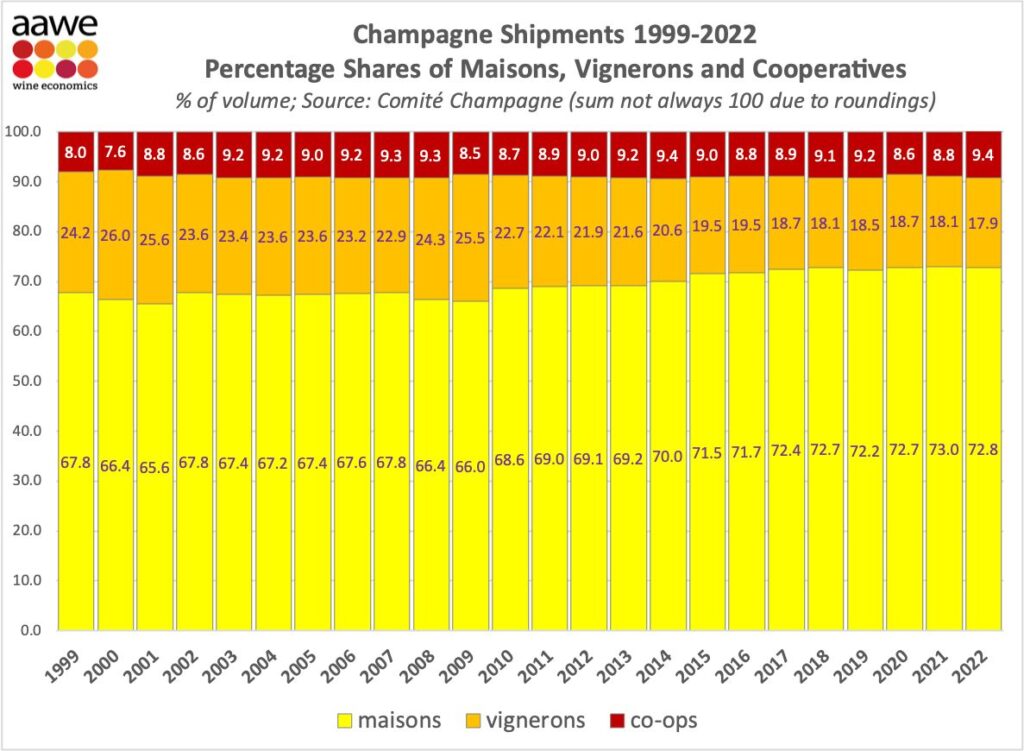 Chart 1: Champagne Volume Shipment Share by Producer Category 1999-2022
(Source: American Association of Wine Economists)
Domaine Jacques Serros
Domaine Jacques Seros is a family-owned RM with an annual production of around 57,000 bottles, located in the village of Avize, in the Côte des Blancs region, known for its Chardonnay wines, in the south of central Champagne. The estate cultivates 8.3 hectares (ha) of vineyards and its holdings are spread across the villages of Avize, Cramant, Ogier, Le Menil sur Ogier, Aÿ, Mareuil sur Aÿ, and Ambonnay. Most of the vineyards are located in villages classified as 100% Grand Cru under the official Champagne classification "Ecole des Crus" (class of origin), which began in 1927, with only Mareuil-sur-Ay being a 99% classified Premier Cru. The founder, Jacques Seros, purchased a vineyard in the village of Avize in 1947 and began producing Champagne in 1964 using some of the grapes while supplying the harvest to négociants such as Louis Rodelaire and Lanson.
Jacques' son Anselm, born in 1952, studied viticulture and oenology at the Beaune School of Oenology. He trained in the cultivation and vinification of Burgundy wines at Domaine Leflaive, Coche-Durie, and Comte Lafont before joining Domaine Jacques Seros in 1974, and officially taking over the family business in 1980.
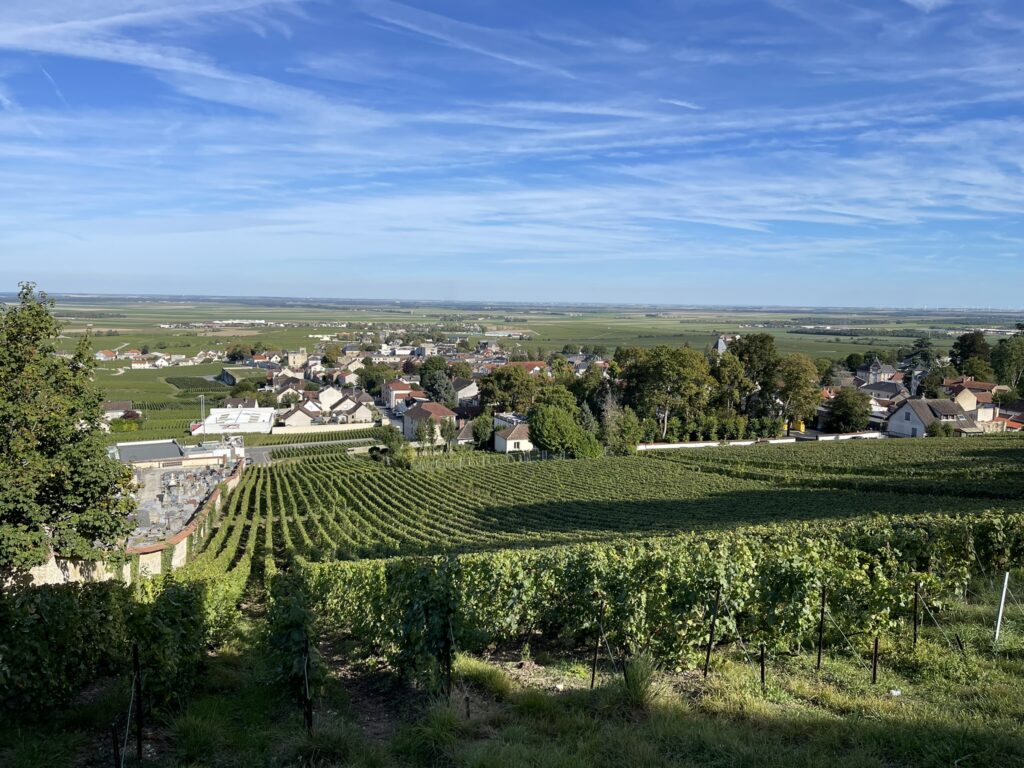 Photo 2 : Panoramic view of the village of Aviz
Cultivation and Brewing
Of the 8.3 ha of vineyards cultivated by Domaine Jacques Seros, 7.3 ha are planted to Chardonnay and 1 ha to Pinot Noir. The vineyard is divided into 54 parcels, and the average age of the vines is over 55 years. The vineyard has 70,000 vines of Chardonnay and 9,500 vines of Pinot Noir.
Anselm first became aware of organic farming in the early 1990s, and later became committed to biodynamics in 1996, but in 2002 he distanced himself from biodynamics because he became disenchanted with the dogmatic approach of this farming method. In 2002, he became disillusioned with the dogmatic methods of biodynamics and distanced himself from biodynamics. He was impressed by Masanobu Fukuoka's (1913-2008) "Natural Farming: Revolution with a Single Straw," and became more oriented toward natural farming.
Anselm's training at a top Burgundy estate has greatly influenced the taste of Domaine Jacques Seros Champagne today, and as in Burgundy, the primary fermentation takes place spontaneously in small 228 liter French oak barrels, including new oak, with no yeast culture added. The wine is then aged in barrels for six months.
The yeast used for the second fermentation in the bottle for the liqueur de tirage (the preparation liqueur) is also cultured from yeast isolated at the estate. The sugar used for dosage is MCR (moût concentré rectifié = concentrated grape juice), rather than the more common sucrose or sugar cane, and when asked why MCR is used, the answer is often, "Because it gives more depth to the flavor. Anselme Celos replied, "Because grape juice is more natural for Champagne made from grapes.
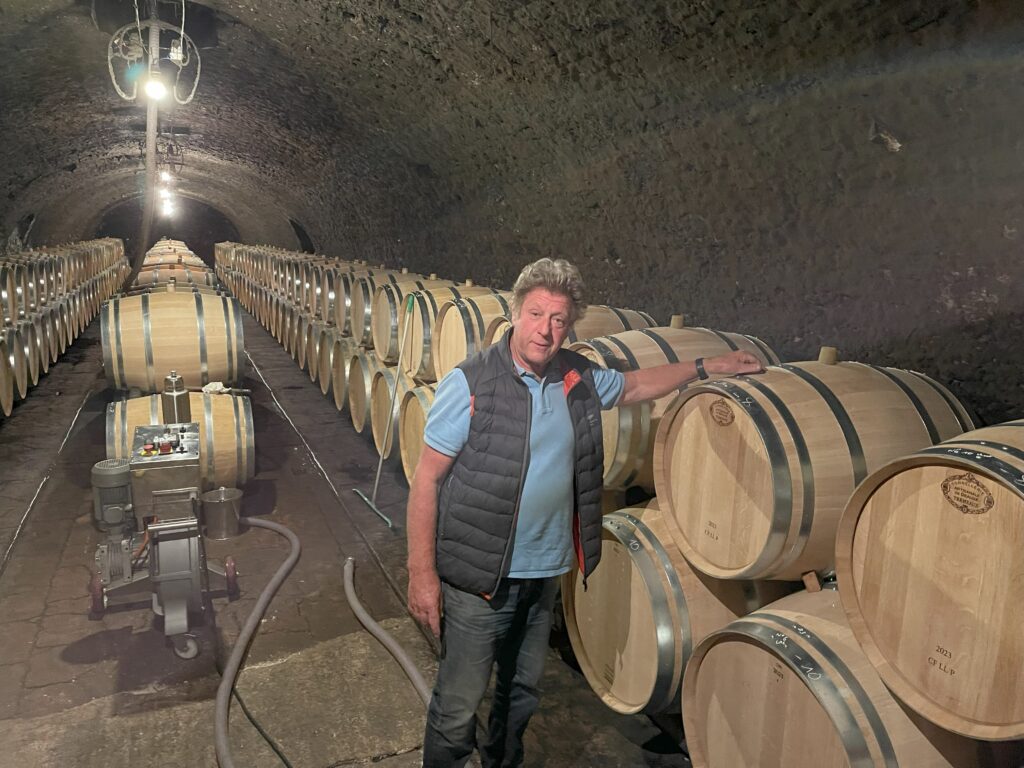 Photo 3 : Anselm Serros
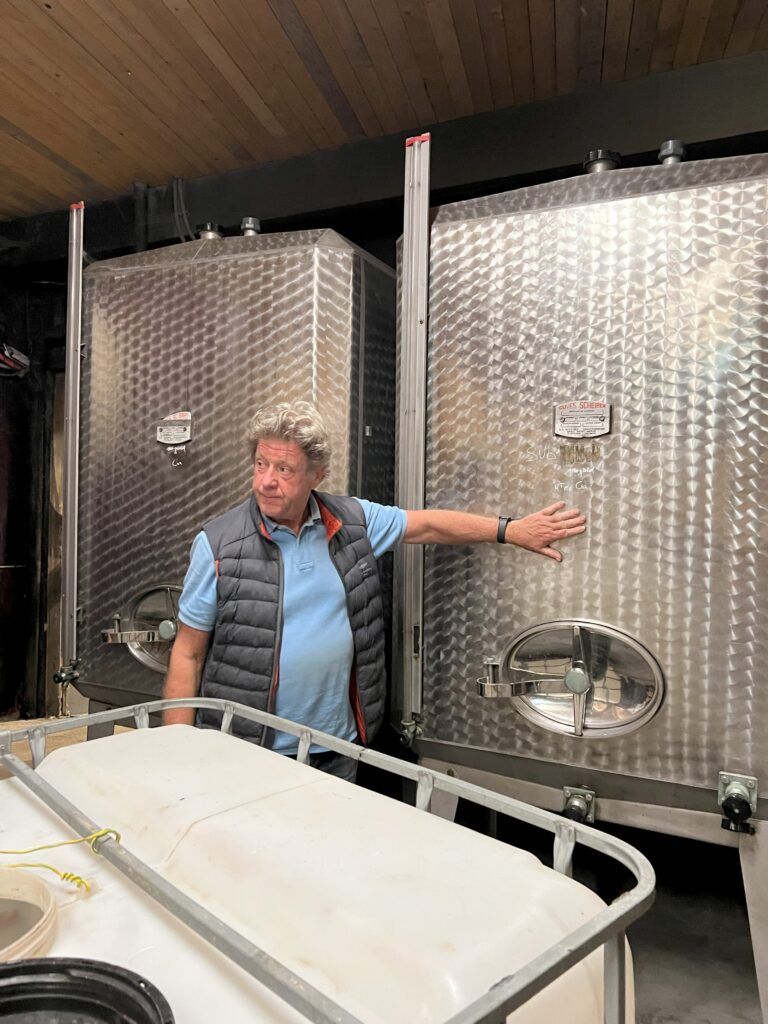 Photo 4 : Tanks used for solera in Spustance
Wine
With a production of less than 5,000 cases, Domaine Jacques Seros produces a wide variety of Champagnes. The Initial and Version Originale (V.O.) are 100% Chardonnay Blanc de Blancs, which are shipped at the youngest age, while the V.O. is made from grapes from the upper slopes of the vineyards in the villages of Avize, Cramant and Ogier, The initials are from the lower slopes. Both wines are shipped after secondary fermentation and 5-6 years of sur-lat aging. The slightly darker colored rosé is a 7-8% blend of V.O. and Pinot Noir red wine supplied by Domaine Eglis-Ulier.
Domaine Jacques Seros' signature Champagne is Chevoustance (Substance = "essence"), which is blended using the Solera system. This Blanc de Blancs is made from Chardonnay grapes from the Les Charentennes and Les Malvillains vineyards in the village of Avize, and includes all vintages since 1986. Bottle-aged for more than 10 years after shipping, Chevoustance has a mineral nuance and a mixed taste that makes it a unique Champagne.
While Chevre Stance receives the highest praise from wine critics, it is the Millésimes, the only domaine to display its vintage, that currently fetches the highest prices. A search of wine-searcher.com as of this writing (April 2024) shows that the global average retail price for the 2008 vintage is 540,000 yen (750 ml). While the wine is rich, some vintages can have too much oxidative nuance, making it a wine for different tastes. The 2010 vintage, released by Anselm's son Guillaume, is not a 100% Chardonnay Blanc de Blancs, but a Pinot Noir blend.
In 2010, Anselm Seros, who has always focused on reflecting the individuality of the vineyard, introduced six single-vineyard Champagnes. They are called the Lüdi series, and in wine terms, "ludi" means little more than "parcel. In fact, each champagne is called by its parcel name: "Les Carrels" (100% Chardonnay) from the village of Le Mesnil sur Auger, "Chemin de Chalons" (100% Chardonnay) from the village of Cramant, "Les Charentennes" (100% Chardonnay) from the village of Avize, "La Court Faron" (100% Chardonnay) from the village of Ai, and "La Cote Faron" from the village of Pillon. La Côte-Faron" (100% Pinot Noir), "Sous le Mont" (100% Pinot Noir) from the village of Maruille-sur-Ay, and "Le Bout du Clos" (80% Pinot Noir and 20% Chardonnay) from the village of Ambonnay.
The Ruedi series uses the Champagne réserve perpétuelle (réserve perpétuelle = "perpetual storage") blending method, in which base wines from multiple vintages are added to the 1,800-liter barrels of each of the six items. Unlike the Schubstance solera system, in which blending occurs in stages in multiple vats, the Réserve Perpétuelle tends to show the characteristics of the most recent vintage, when the last additions are made. The annual production of the four items in the Lüdi series is 2,800 bottles, but only 600 bottles of "Chemin de Chalons" and "Les Charentennes" are available, and they are rare products that can only be purchased in the "Lüdi Collection," a set of six items.
Of the six lieux-die series, the standout is "La Côte Faron," vinified from Pinot Noir from the village of Aÿ, which was once called "Contraste" (meaning "contrast"). This was the first Ruedi commercialized by Anselm Seros, and the Reserve Perpétuelle has followed since the 1994 vintage. The wine is a rich golden color, reflecting the character of the Pinot Noir grapes grown on the steep south-facing slopes of the village of Aÿ, with a mellow, unconnected taste and mild acidity for a Champagne.
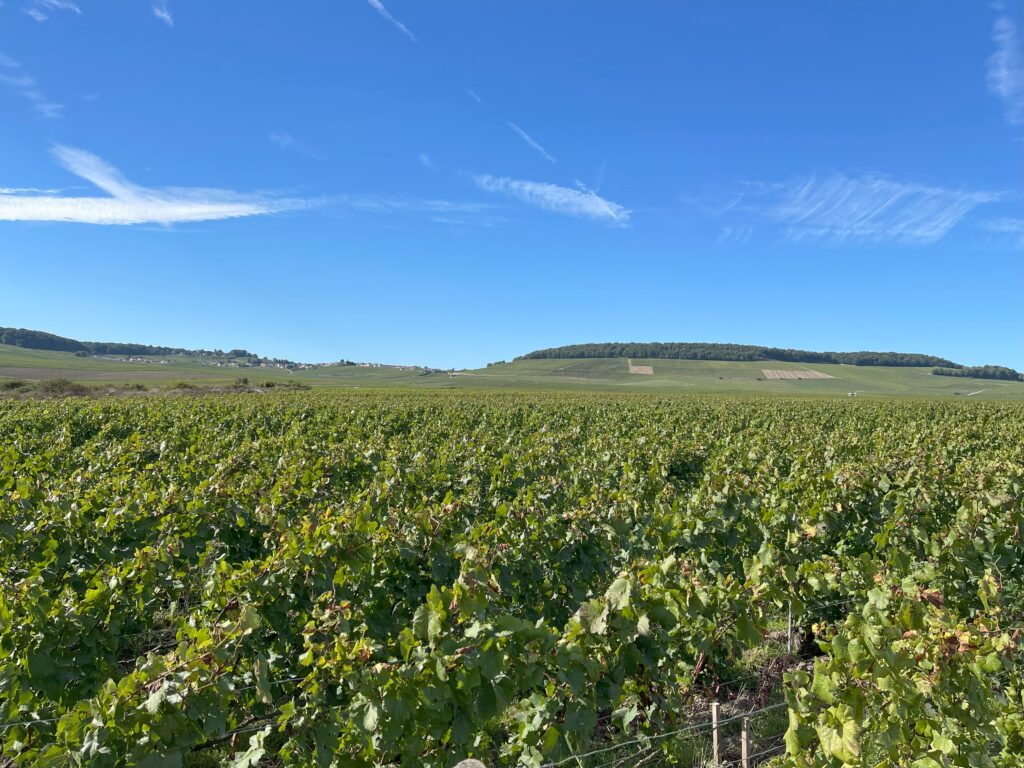 Photo 5 : Les Chantrennes vineyard (Avize)
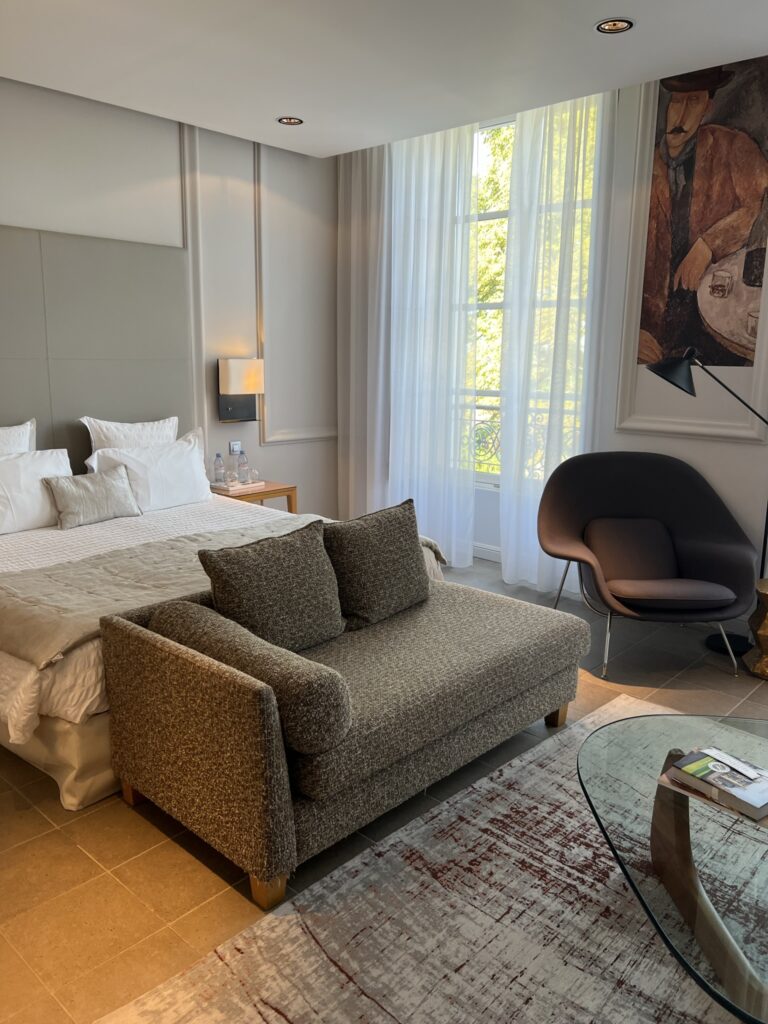 Photo 6 : Room at Hotel Resavise
After the 2018 harvest, Anselm Seros announced his retirement and handed over representation of the estate to his son Guillaume. However, just as Henri Jayet continued to support Emmanuel Rouget after his complete retirement in 2001, Anselm, now 72, continues to work in the vineyards and cellar. I had the opportunity to taste some of the champagnes vinified by Guillaume, and they were as good as Anselm's, leaving no doubt that the glory days of Domaine Jacques Seros will continue.